

Chile prosecutor drops probe in 2010 mine collapse
 Sqhares of Facebook Inc. increased 1.2 percent
to $38.08 in morning trading Wednesday.
That's the highest the stock has traded since
the company's highly anticipated initial public
offering ended with a thud. The stock is up
by more than 50 percent since last week.
The world's biggest online social network has
been on a roll since reporting stronger-than-
expected earnings on July 24. Investors are
especially upbeat about its fast-growing
mobile advertising revenue.
RECOMMENDED: Are you savvy about
social networks? Take our quiz to find
out.
Facebook's ability to grow mobile revenue
was one of the biggest concerns in the
weeks leading up to its IPO last year.
Investors were worried that its ad business
was not migrating to mobile gadgets as
quickly as its user base. Facebook urged
patience.
In the April-June quarter, Facebook derived
41 percent of its ad revenue from mobile
advertising, or about $656 million of $1.6
billion. That's up from zero in the spring of
2012 and from 30 percent in the January-
March quarter of this year. CEO Mark
Zuckerberg said last week that the company
has "made good progress growing our
community, deepening engagement and
delivering strong financial results, especially
on mobile."
Still, Facebook has room to grow. Research
firm eMarketer expects Facebook to increase
its mobile advertising revenue more than
fourfold to more than $2 billion this year.
This would give the Menlo Park, Calif.,
company a 13 percent share of the global
mobile ad market, up from about 5 percent
last year.
Facebook is currently No. 2 in mobile ads,
well behind Google. EMarketer estimates that
Google had a 52 percent share of the global
$8.8 billion mobile ad market last year. This
year, the firm expects Google's share to grow
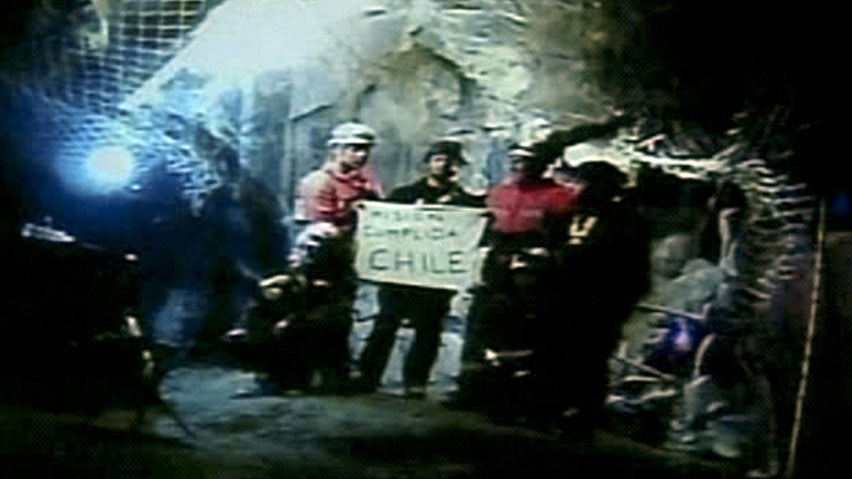
to 56 percent.A Chilean prosecutor has ended a probe of
possible responsibility for the mine collapse
that trapped 33 men for more than two
months in 2010, and the rescued miners
expressed anger at the decision on Thursday.
The cave-in at the San Jose mine in the
Atacama desert brought the mine’s safety
record into focus and put mining, Chile’s top
industry, under close scrutiny.
The decision by a prosecutor in the northern
region of Atacama to bring no charges
against the owners of the mine or
government regulators was announced late
Wednesday after a three-year investigation.
“This is a disgrace to Chile’s justice system,”
Mario Sepulveda, who became the public
face of the miners, told the Associated Press.
“It’s impossible that in an accident of this
magnitude no one is held responsible,”
Sepulveda said. “Today, I want to dig a deep
hole and bury myself again, only this time, I
don’t want anybody to find me.”
The miners said it felt like an earthquake
when the shaft caved in above them on Aug.
5, 2010, filing the lower parts of the copper
and gold mine with suffocating dust. Hours
passed before they could even begin to see a
few steps in front of them. Above them tons
of rock shifted constantly, threatening to
bury them forever.
People on the surface didn’t know for more
than two weeks that the men had survived
the collapse, and the 33 stretched a meagre
48-hour store of emergency food for 17 days,
eating tiny capsules of tuna and sips of
expired milk. A narrow shaft finally reached
their haven and the world learned they were
alive.
That shaft allowed food and water to reach
the men while rescuers drilled a bigger
escape hole. Finally, in a flawless operation
that ended in the early hours of Oct. 13, the
miners were hauled up one by one in a cage
through 600 metres of rock.
